

END-TO-END GUIDANCE FOR YOUR DOG’S and CAT'S DIGESTIVE HEALTH
Click one of the icons below to get started:


ANALYSIS
DOG
1 in 4 Dogs Experience Digestion Symptoms Annually*
Pet parents often find it challenging to understand and assess changes in their dog’s stool. While not a substitute for a veterinary assessment, Poopscan by IAMS(open in new tab) can help you monitor and prioritize your dog’s digestive health.
*Mars Internal Study 2020

Poop Analysis in a Snap
You can learn about your dog’s digestive health from their stool. Poopscan instantly analyzes poop quality and provides helpful insights into your dog’s health.
CAT
Vomiting and diarrhea are common gastrointestinal symptoms that often lead cat owners to seek veterinary care.
NUTRITION
It All Starts with Their Food
Choosing food with ingredients that support a healthy digestion and stool is important for your dog’s and cat's digestive and overall health.

Ingredients Matter
When looking for dog and cat food that supports digestion, look for ingredients like…
- Beet Pulp
- Fructooligosaccharides (FOS)
- Natural Fibre
An important characteristic of fibre is its fermentability, or how well it can be broken down by the bacteria that normally reside in the dog's or cat’s intestine. This breakdown of dietary fibre produces short-chain fatty acids (SCFAs) that provide energy to the cells lining the intestines. Different types of fibre vary in fermentability.
Fibre sources used in pet foods include cellulose, which is poorly fermentable; beet pulp, which is moderately fermentable; and gums and pectin, which can be highly fermentable.
Research has shown that moderately fermentable, prebiotic fibre, such as beet pulp, provides the benefits of energy for the intestinal lining, increased nutrient absorption, and supports optimal poop consistency, while limiting excessive gas or bloating.

IAMS™ DRY supports healthy digestion
ALL IAMS™ Dry recipes include prebiotic fibre supporting healthy digestion in 10 days. Satisfaction guaranteed or your money back.
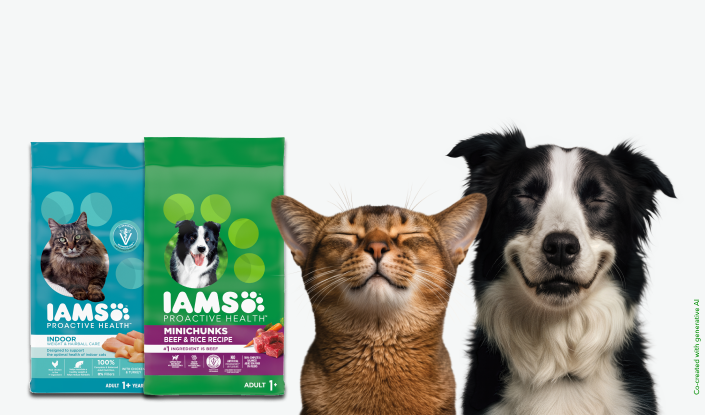
Find the Right Food for Your Dog or Cat
Dog or Cat food isn’t one size fits all – try our Food Finder to see which food is the right fit for your pet.
COMMON SYMPTOMS - DOG ONLY (CAT is coming soon)
Recognizing Digestive Symptoms in Your Dog
All dogs have digestive issues from time to time. Learning more about common digestive concerns can help you care for your dog and know when to seek medical care.

Understanding Gastrointestinal Symptoms in Dogs
All dogs have digestive issues from time to time. Learning more about common digestive concerns can help you care for your dog and know when to seek medical care.

Common Causes of Diarrhea & Constipation
Diarrhea and constipation can have a variety of causes, including infections, changes in diet, or can be signs of a serious illness. If you are noticing symptoms in your dog, it’s important to see a vet to rule out underlying causes and prevent dehydration and nutrient loss.


Constipation is common in dogs, but it can lead to more troubling conditions if left untreated. Get the information you need about canine constipation to help support your dog’s digestive health.

Common Causes of Vomiting
Vomiting can be caused by intestinal upset, such as eating irritating materials or intestinal parasites. However, it can also be a symptom of a more serious illness. Vomiting can lead to serious complications if treatment is not started early enough to prevent dehydration and nutrient loss.


GOT QUESTIONS ABOUT YOUR DOG'S DIGESTIVE HEALTH?
-
How can I tell if my dog is having digestive symptoms?
One of the first signs could be your dog’s poop, which is why it makes sense to keep a close eye on your dog’s stool. Significant changes in frequency, texture, quantity, and colour, especially if you notice blood in your dog’s feces, can be symptoms of digestive disturbance. If you have concerns about your dog’s poop, you can start by using Poopscan by IAMS™.
In most cases, if the changes in your dog’s stools last only a day or so, there’s probably little need to worry. However, if diarrhea, constipation, or odd-coloured stools last for more than a few days — or they are accompanied by a low fever, lethargy, loss of appetite, or blood in the stool — you should contact your vet.
How does Poopscan work?
Your dog’s stools can be one of the first indications of digestive disturbance, which is why it’s important to monitor your dog’s stool. With Poopscan you can get AI-generated feedback by taking a photo of your dog's stool. Poopscan is not a diagnostic tool but rather designed to give you guidance and peace of mind.
How to Use Poopscan
- Using your mobile phone’s camera, take a picture of your dog’s feces on the ground. Make sure the rest of the background is clear of any other items.
- Answer a few important questions and upload your photo.
- Get feedback and actionable next steps for your dog’s care.
What causes diarrhea in dogs?
Diarrhea is common in dogs and can be caused by issues such as bacteria or viral infections, intestinal parasites, consuming offensive matter like garbage, changing diet, or even stress. Diarrhea can lead to dehydration, and should be monitored carefully.
When should I take my dog to the vet for diarrhea?
If your dog has diarrhea, they could be at risk for dehydration and should be seen by a vet. Also, if your dog’s diarrhea is accompanied by fever, weakness, blood in the stool, vomiting, lethargy, loss of appetite, or abdominal pain, a visit to the vet is advisable.
What causes constipation in dogs?
A lack of bowel movements is certainly a sign. Other signs of constipation in dogs include straining when trying to poop, circling more than normal, dragging their rear on the ground, pain, decreased appetite, vomiting, smaller than normal feces, weight loss, and bloating.
What are the signs of constipation in dogs?
A lack of bowel movements is certainly a sign. Other signs of constipation in dogs include straining when trying to poop, circling more than normal, dragging their rear on the ground, pain, decreased appetite, vomiting, smaller than normal feces, weight loss, and bloating.
When should I take my dog to the vet for constipation?
If your dog’s constipation has persisted or is accompanied by fever, weakness, vomiting, lethargy, loss of appetite, or abdominal pain, a visit to the vet is advisable.
What causes vomiting in dogs?
Vomiting can be caused by issues such as bacterial or viral infections, motion sickness, internal parasites, or eating something that upsets your dog’s stomach. Vomiting can lead to dehydration. If your dog vomits multiple times, or is experiencing other symptoms, you should contact your vet.
When should I take my dog to the vet for vomiting?
If the vomiting is persistent, your pet risks dehydration and should be seen by a vet. Also, if your dog’s vomiting is accompanied by fever, weakness, blood in the stool, diarrhea, lethargy, loss of appetite, or abdominal pain, a visit to the vet is advisable.
My dog gets car sick. What can I do?
Many dogs get sick when riding in the car. However, there are some steps you can take to make travel easier for you and your pet.